

What you eat and drink can influence many aspects of your health, including your urinary system. While there is no single diet that works for everyone, certain foods and beverages may affect bladder comfort and urinary habits. Understanding the connection between diet and bladder health can help you identify personal triggers and make healthier choices.
For people experiencing urinary symptoms, choosing Bladder Healthy Foods and maintaining good hydration may be part of supporting overall urinary wellness. However, food is only one factor, and persistent symptoms should always be properly evaluated.
How Can Food Affect Bladder Health?
The bladder stores urine until it is convenient to urinate. Certain foods and beverages may affect how sensitive the bladder feels or how often you need to urinate.
Some people may notice increased urgency, frequency, or discomfort after consuming particular foods. Others may not experience any noticeable effect.
This is because dietary triggers can vary significantly from person to person. A food that causes discomfort for one individual may be perfectly well tolerated by another.
Therefore, it is not necessary for everyone to follow the same restrictive diet. Instead, paying attention to how your body responds to different foods can be more useful.
Can Certain Foods Irritate the Bladder?
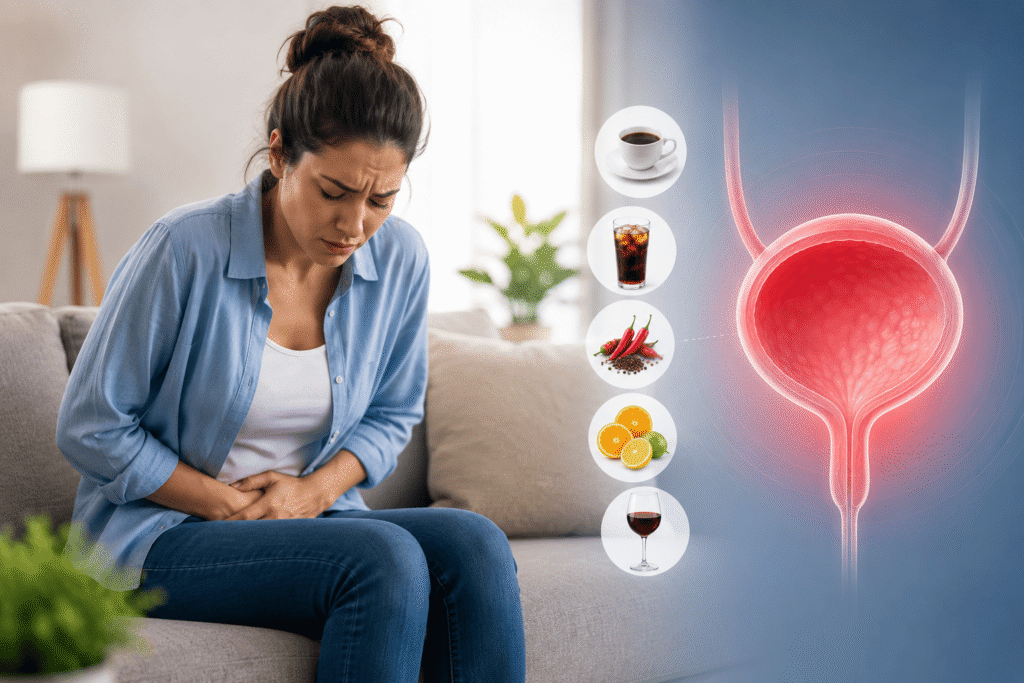
Yes, certain foods and beverages may irritate the bladder in some people. This is particularly relevant for individuals who already experience urinary sensitivity or bladder-related symptoms.
When the bladder is sensitive, certain dietary triggers may make symptoms more noticeable. These may include a stronger urge to urinate, increased frequency, or bladder discomfort.
However, dietary irritation does not necessarily mean there is damage to the bladder. If symptoms continue even after changing your diet, another underlying condition may need to be considered.
What Are Common Signs of Bladder Irritation?
Bladder irritation may be associated with several urinary symptoms.
These can include:
- A frequent need to urinate
- A sudden or strong urge to urinate
- Increased nighttime urination
- Bladder or lower abdominal discomfort
- Burning while passing urine
- Urinary urgency that is difficult to control
These symptoms can have several causes. Urinary tract infections, overactive bladder, prostate conditions, bladder disorders, and other urological problems can produce similar symptoms.
For this reason, recurring symptoms should not automatically be attributed to diet.
How Does Diet Relate to an Overactive Bladder?
An overactive urinary bladder can cause a sudden urge to urinate, frequent urination, and sometimes urine leakage.
Certain dietary habits may worsen these symptoms in some individuals. However, food is not considered the only cause of an overactive bladder.
If you regularly experience overactive bladder symptoms, it is important to look at the bigger picture. Fluid intake, bladder habits, medications, lifestyle, age, and underlying health conditions can all play a role.
A urologist can help determine what may be contributing to your symptoms and recommend appropriate treatment.
What Makes a Bladder-Friendly Diet?
A Bladder-Friendly Diet does not necessarily mean avoiding large groups of foods. Instead, it focuses on maintaining balanced nutrition while identifying foods or drinks that may trigger your individual symptoms.
A healthy dietary pattern generally includes a variety of vegetables, fruits, whole grains, fibre-rich foods, and appropriate sources of protein.
Adequate hydration is also important. Water is generally a good choice for maintaining hydration and supporting normal urinary function.
However, individual fluid requirements can vary. People with certain kidney, heart, or other medical conditions may have specific fluid recommendations from their doctor.
Should You Avoid Foods That Trigger Symptoms?
If you repeatedly notice bladder discomfort after consuming a particular food or drink, temporarily reducing it may help you determine whether there is a connection.
One useful approach is to maintain a food and symptom diary. Write down what you eat and drink, when you consume it, and whether you experience any urinary symptoms afterward.
Over time, you may notice patterns.
The goal is not to eliminate every food that could potentially irritate the bladder. Instead, it
is to identify your own triggers while maintaining a nutritious and balanced diet.
Does Drinking More Water Improve Bladder Health?
Staying adequately hydrated is an important part of urinary health. When you do not consume enough fluids, urine can become more concentrated, which may contribute to discomfort in some people.
At the same time, drinking excessive amounts of water can increase urinary frequency and may be inconvenient for people who already experience urgency.
Rather than deliberately drinking very large quantities of water, aim for regular hydration throughout the day according to your individual needs.
If you have been advised to restrict fluids because of a medical condition, follow your doctor’s recommendation.
When Should You Consult a Urologist?
Dietary changes may help with mild symptoms, but they should not replace medical evaluation when symptoms are persistent or significant.
Consider consulting a urologist if you experience:
- Persistent urinary frequency or urgency
- Repeated nighttime urination
- Burning while urinating
- Difficulty passing urine
- Weak or interrupted urine flow
- Urine leakage
- Persistent pelvic or bladder discomfort
- Blood in the urine
- Difficulty emptying the bladder
These symptoms may have causes that require specific diagnosis and treatment.
For example, urinary symptoms in men may sometimes be related to prostate problems, while women may experience urinary symptoms related to infections or other bladder

The Bottom Line
Certain foods and beverages can affect bladder comfort and urinary symptoms in some people, but there is no universal list of foods that everyone needs to avoid.
The best approach is to maintain a balanced diet, stay appropriately hydrated, and pay attention to your individual symptoms. Choosing Bladder Healthy Foods can support overall wellness, but persistent urinary problems should not be managed through diet alone.
If urinary symptoms continue, become more frequent, or interfere with your daily life, consult a urologist to identify the underlying cause and discuss appropriate treatment.